
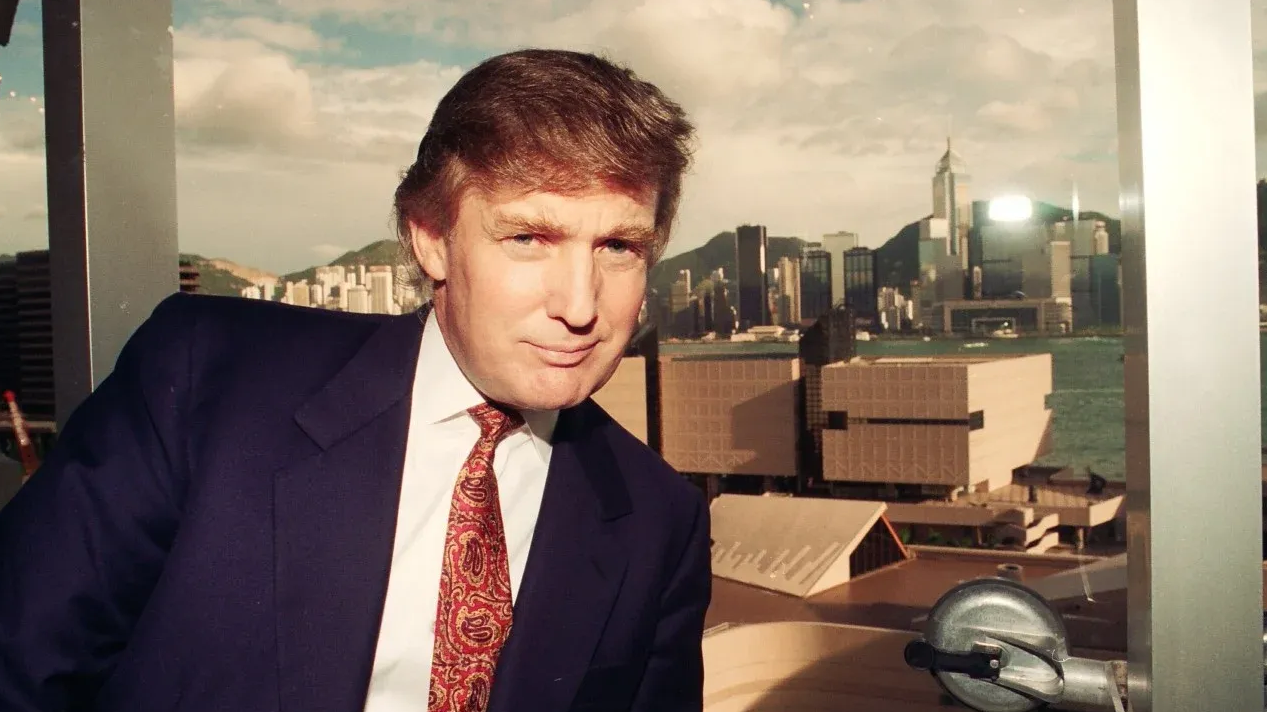
For a long time, the public image of Donald Trump was cemented during his 2016 campaign: the radiant “successful businessman.” His team meticulously crafted a legend of a “self-made” man who built a vast, successful real estate empire. This narrative implied a simple, powerful message for voters: a man who could efficiently manage a commercial empire could surely steward a nation’s economy. His famous “art of the deal” would be applied to complex foreign relations, securing the best interests for the country with a merchant’s instinct. This persona, a “business strongman” distinct from traditional politicians, was undeniably compelling.
While Trump certainly benefited early from his father’s assets and real estate empire, earning fame for his high-profile lifestyle, his actual resume reads less like a history of success and more like a comprehensive catalog of trial and error. His business ambitions were vast, attempting to stamp the “Trump” brand into every conceivable crevice of public life. He aggressively promoted “Trump Ice” bottled water and “Trump Steaks,” and even acquired “Trump Shuttle” (an airline) which, predictably, folded within two years. Some of these ventures serve as perfect case studies in over-branding.
It might be hard to believe a university could be a “startup project,” but the infamous “Trump University” fits the bill. Founded in 2005, it claimed to teach Trump’s own “priceless” real estate investment secrets. In reality, the project was neither a university nor had any degree-granting authority. It was essentially a series of high-priced seminars and “elite” mentorship programs, with tuition ranging from $1,500 to $35,000. Many students later alleged the institution was a complete scam, charging for “expert guidance” that was worthless and “insider tips” that never materialized. Ultimately, “Trump University” faced multiple class-action lawsuits for fraud and false advertising. The case became a major scandal during his presidential campaign, and shortly after his election, Trump agreed to a $25 million settlement to end the years-long litigation.

Equally bizarre was “Trump Vodka.” Launched in 2006, the bottle was designed to look like a gold brick—gaudy and ostentatious to the extreme. Its tagline was, “The excellence worthy of the Trump name.” However, due to dismal sales and persistent production and distribution problems, the glittering gold vodka was completely discontinued just a few years later.
Trump also created “Trump Network,” a multi-level marketing scheme selling vitamins and wellness products. There was the ambitious travel website, “GoTrump.com.” And then there was “Trump Mortgage LLC,” which launched with great fanfare just before the 2008 financial crisis and quickly vanished. Beyond these, there were “Trump” branded fragrances and even a bizarrely designed “Trump: The Game” (a board game). All of these projects ultimately became dark spots on his brand’s licensing history.
Of course, his signature “business style” is best demonstrated in his home turf: real estate and the casino industry. The “Trump Taj Mahal Casino” was once promoted as the “Eighth Wonder of the World.” But it wasn’t long before this “wonder,” along with “Trump Castle” and “Trump Plaza,” collapsed into a mire of bankruptcy.

This leads to an interesting phenomenon. The “success” of many in the wealthy class is largely built on a pile of “infinitely renewable” capital for trial and error. How many chances does an ordinary person get to fail? For Trump, dozens of failed projects were mere “ripples” in his brand-licensing ocean, causing no real harm. As long as the core business (like real estate) or a later “hit product” (like his reality show) could hold the line, it was enough to cover all the failures and provide chips for the next “high-stakes gamble.” From this perspective, he truly mastered the art of bankruptcy and reorganization.
So why did the public’s impression of him as a “successful businessman” remain so unshakable, like a collective “Mandela Effect”? It stems from a textbook case of “personal branding.” Trump’s most successful “product” was never a skyscraper or a half-cooked steak; it was himself. Specifically, it was the “authoritative boss” persona he meticulously cultivated for over a decade on the reality show The Apprentice. This edited, eternally decisive television image was so potent that it completely eclipsed his long, documented history of real-world business failures.

When some Americans say their memory of Trump is the gimmick-loving, boom-and-bust showman of the 1990s, they are remembering reality. But when another group adamantly believes he is infallible, what they are remembering, perhaps, is just that television “character.” In the end, it was this “character” that successfully walked into the White House. A man who proved so “skilled” at bankruptcy and liquidation was now in charge of a nation—and this, perhaps, is the most nerve-wracking “startup project” of his entire career.

Leave a Reply