
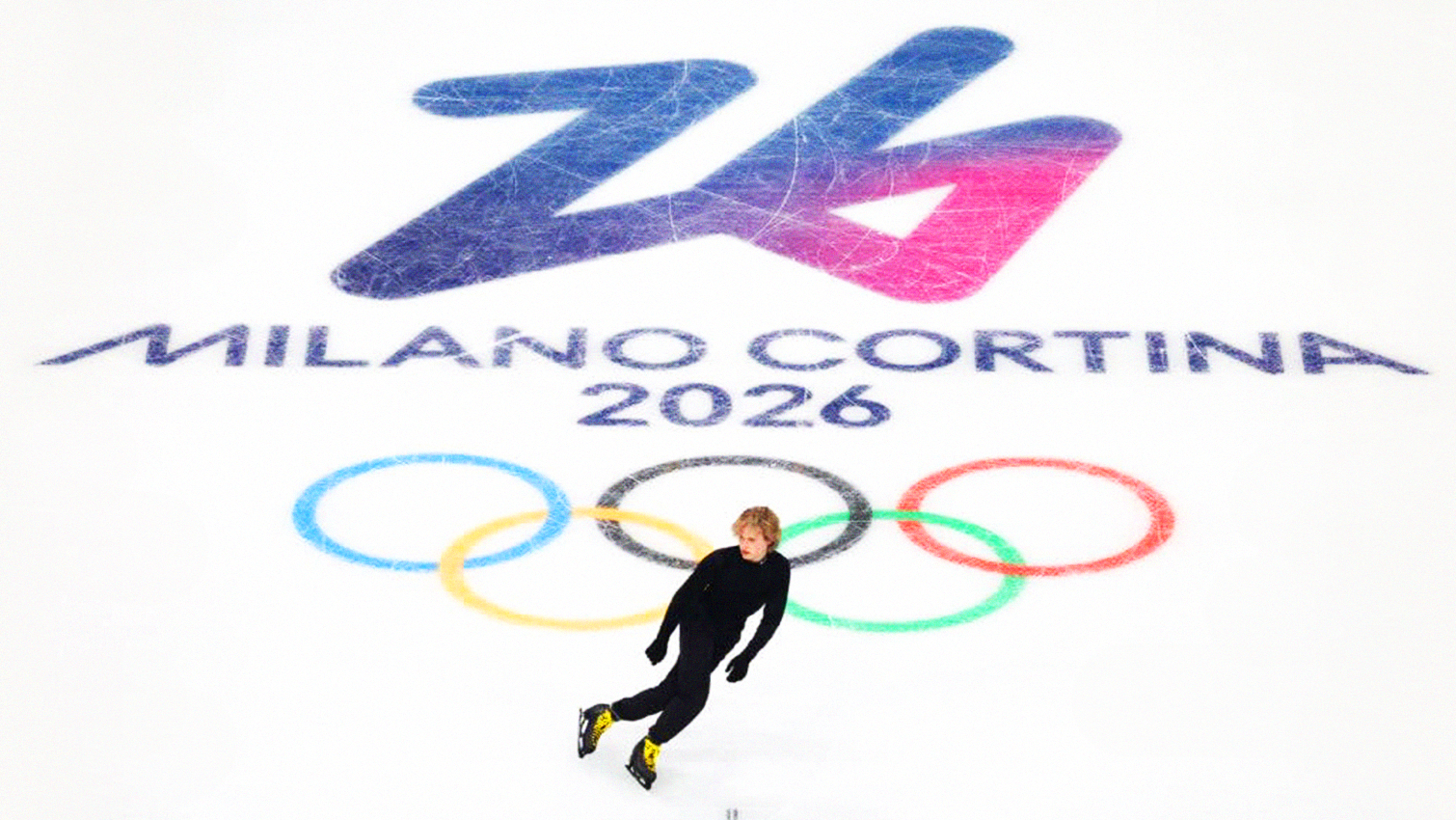
The Milan 2026 Winter Olympics, reaching its halfway mark, has seen the pristine ice transformed into a stage for what can only be described as a collective collapse of probability. Rather than the clinical precision usually associated with elite winter sports, the games have drifted into a realm of high-stakes drama where the predictable has been unceremoniously discarded. A series of low-probability flukes have upended every podium prediction, leaving the final outcomes shrouded in uncertainty.
The men’s figure skating final served as the most jarring opening act for this theater of the unexpected. Heading into the final, the narrative was locked on two titans: Ilia Malinin, the “God of Quad” who had recently set the internet ablaze with a defiant backflip, and Yuma Kagiyama, renowned for his textbook skating and artistic soul. The world expected a binary choice between raw, gravity-defying difficulty and sublime grace. Instead, the ice seemed to reject both. Malinin suffered an epic, earth-shattering meltdown in his free skate after leading the short program, while Kagiyama was plagued by a series of uncharacteristic and costly falls.
This collective misfire by the favorites allowed Kazakhstan’s Mikhail Shaidorov to seize the moment; by simply maintaining a steady, error-free composure, he claimed gold with a score of 291.58—a victory that felt less like a conquest and more like a reward for being the last man standing. Amidst this chaos, Chinese veteran Jin Boyang concluded his third Olympic journey in 17th place. In a night defined by shocks and upsets, the veteran’s final skate was marked by a quiet, fatalistic serenity, lending a sense of closure to a long career.
If figure skating is a test of nerves, short track speed skating is a chaotic experiment in particle physics. In the men’s 1000m heats, the sheer frequency of mid-corner collisions left officials scrambling. China’s Sun Long managed to advance by a razor-thin margin of 0.002 seconds—a microscopic increment of time that nevertheless dictated the trajectory of the next four years of his life. The women’s 500m heats provided an even more visceral spectacle when three out of four skaters in a single group lost their edges simultaneously, sliding into the padded barriers in a heap of tangled limbs. This year, the very concept of “advancing” has been stained with an undeniable layer of pure, raw luck.
However, the true viral sensation of Milan didn’t happen on the ice, but in the post-race flash zone. Sturla Holm Lægreid, the Norwegian biathlon star known for his nerves of steel, chose the aftermath of his bronze medal win to pivot from elite athlete to tragic protagonist in a public melodrama. Eschewing any talk of rifle mechanics or snow temperature, Lægreid broke down before the global media to confess a betrayal of his long-term partner, calling his actions a “betrayal of the love of my life.”
Lægreid declared himself ready to face any consequence, opting for a form of televised self-immolation in hopes of a minuscule chance at reconciliation. He claimed to be haunted by regret and felt a sudden epiphany the night before that he had to “drop this bomb” to prove his sincerity through social suicide. This attempt to insert a relationship mediation segment into an Olympic highlight reel left the international press corps in a state of stunned, awkward silence. Lægreid left with a bronze medal, but he also walked away with a scandal that will dominate the news cycle for weeks. His “social surrender” by the podium effectively eclipsed every shot he fired on the course.
The fallout was compounded when his ex-partner later clarified that such a public performance did little to merit forgiveness. She expressed the profound pain of being thrust into such a situation against her will, noting that Lægreid was well aware of her stance before he went public. While she voiced gratitude for the support of friends and strangers alike, it became clear that this grand, unprompted apology served the ego of the transgressor more than the healing of the victim.
Beyond the personal drama, institutional controversies continued to simmer. On the curling sheets, a protracted standoff between Sweden and Canada over a disputed “double touch” ended in a stalemate as officials upheld the original call despite suggestive replays. Meanwhile, the conclusion of the ice dance event triggered an outright outcry over scoring transparency. A petition demanding a formal review gathered over 1,500 signatures in hours, reigniting the perennial debate over whether subjective bias has finally eroded the bedrock of fair play in artistic judging.
Ultimately, these games may be remembered less for technical records and more for these messy, uncontrollable human fragments—the moments where the calculated precision of sport collided with the agonizing and utterly unquantifiable reality of human error and personal crisis.

Leave a Reply