
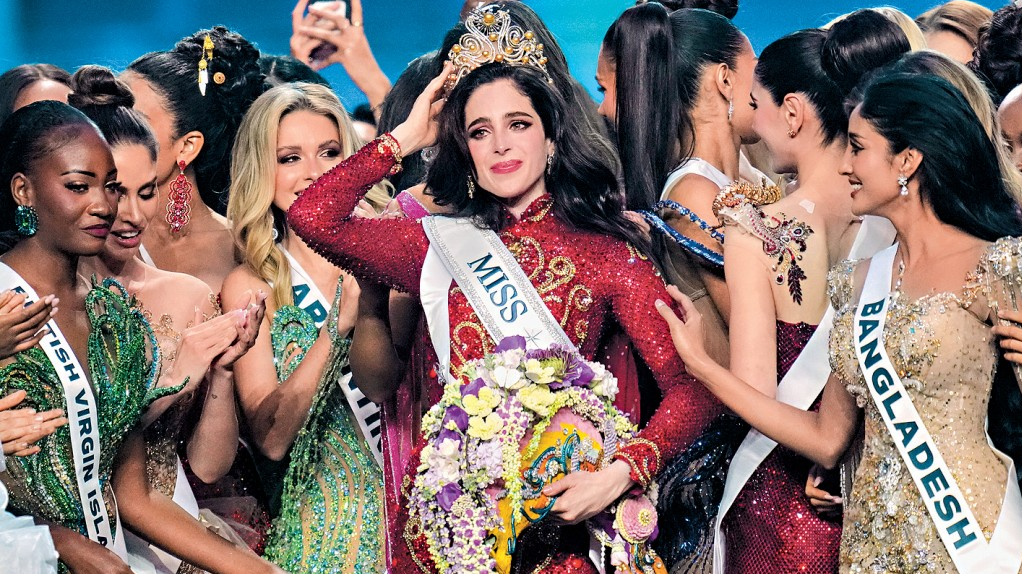
The Miss Universe 2025 concluded in Thailand on November 21st, with Miss Mexico, Fátima Bosch, ultimately taking the crown. However, even before its finale, the pageant had already become the focus of the year’s hottest “drama,” perhaps making it the most contentious pageant in its history.
As one of the world’s most prestigious and longest-running international beauty competitions since its founding in 1952, Miss Universe has always aimed to discover and celebrate modern women who embody beauty, intelligence, and culture, serving as a platform for cultural exchange and showcasing the potential of female leadership. Yet, this year’s trip to Thailand unexpectedly escalated into a real-life “Rebels’ Alliance” drama due to a power struggle.
The story began at the sash ceremony on November 4th. The Thai organizing director, Nawat Itsaragrisil, publicly humiliated Miss Mexico Fátima Bosch with terms like “stupid” and “simple-minded” and even threatened to call security to expel her, all because she refused to cooperate with an extra promotional event. Facing this public display of power bullying, Fátima did not back down. She immediately walked out, making a dignified but firm statement: “We are empowered women and this is a platform for our voice and no one can shut our voice!”
Director Nawat’s remarks ignited the fury of all the contestants, and they showed their support for Fátima’s defiance through action. Led by the reigning Miss Denmark, nearly 20 contestants, primarily from the Latin American delegation, collectively withdrew from the competition. “I’m not a doll to be made up, styled and have my clothes changed.” they declared. They ignored the threat of “disqualification upon leaving,” and a picture of them uniting, dining, and singing together outside the venue was hailed by the media as “the most powerful protest in pageant history.” Through kindness and solidarity, they transformed a beauty contest into a landmark event in the struggle of women against the arrogance of power. Even the Mexican president personally voiced support, praising Fátima’s courage.
On the coronation night of the 21st, the “rebel” contestant who had endured public humiliation, Fátima Bosch, fought her way through, ultimately defeating 120 global contestants to clinch the title, becoming the fourth Miss Universe in Mexican history. Fátima’s acceptance speech, “Dreams are important, never let anyone doubt your worth,” truly felt like a fulfilling narrative come to life.
However, this “dark horse comeback” also triggered significant public relations controversy. Many questioned whether her victory was a “politically correct” strategy adopted by the organizers to quell the earlier storm. Fan favorite Miss Côte d’Ivoire, Olivia Yace, only placed fifth, leading fans to cry “foul play” online. Allegations also surfaced claiming that the Miss Universe owner had a private relationship with Miss Mexico’s father. Simultaneously, the pre-pageant resignation of two judges over concerns about the event’s transparency added further suspicion to the victory.
Beyond the gossip and controversy, the competition itself was marked by constant incidents: Miss Jamaica, Gabrielle Henry, unfortunately missed a step and fell off the stage during the preliminary competition, thankfully without serious injury; Miss Israel, Melanie Shiraz, and Miss Palestine, Nadine Ayoub, shared the stage, with their eye contact sparking political tension; and even a former Miss Universe winner came forward to criticize the Thai director, making an anti-Asian racist remark, calling him a “vile Chinese person” and broadly attacking the Asian community.
This year’s pageant truly didn’t lack any kind of drama.
Of course, there were also many bright and refreshing moments. The National Costume Show provided one of the most entertaining highlights: Miss Norway dressed up as a giant, “walking salmon,” a lively and bold tribute to Norway’s marine tradition. Her abstract style sparked a wave of salmon-related discussion online. Miss China’s representative, Zhao Na, a graduate of the University of Queensland, showcased the charm and strength of modern Oriental women with her Guzheng (Chinese zither) talent and a gown praised as “Disney Princess”-like, successfully advancing to the Global Top 12.
Miss Universe 2025 felt more like a social microcosm filled with conflict and defiance. The highly focused withdrawal controversy undoubtedly prompted people to rethink their perception of beauty. The contestants’ resistance to power demonstrated that true beauty is the courage to say “no,” the principle of standing your ground, and the kindness of mutual support. Even when beauty comes as a label, beyond commercial interests and captivating looks, it is the shining brilliance of human character that is the most moving.

Leave a Reply