
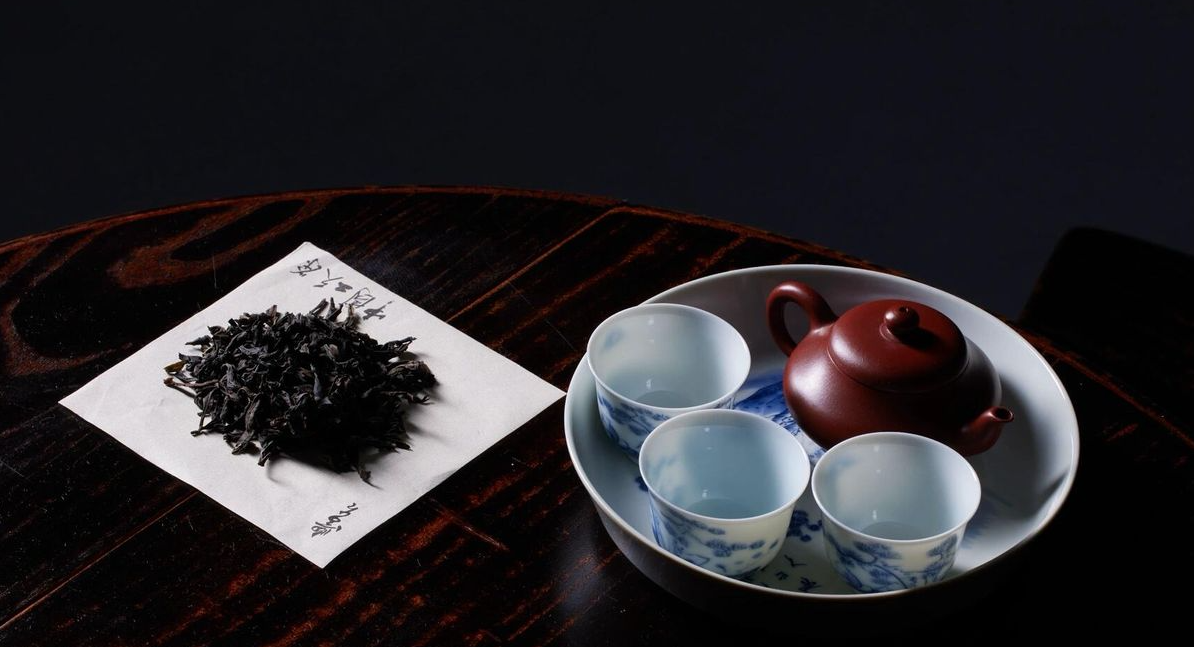
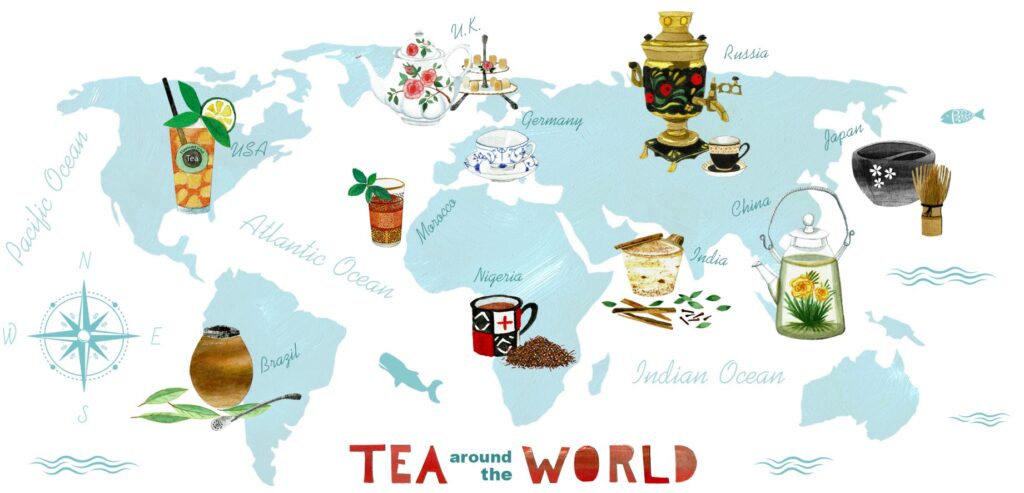
From the mint-scented teahouses of Morocco to the refined afternoon teas under the London sun, humanity’s fascination with an Eastern leaf seems to know no borders. This remarkable beverage exhibits a curious phenomenon in nearly every language: its name almost invariably falls into one of two “camps”—sounding either like “cha” or “te.”
Both of these distinct-sounding roots originate in China. Their divergence draws an invisible map, clearly marking the separate paths of global trade from centuries past and telling a grand epic of land and sea.
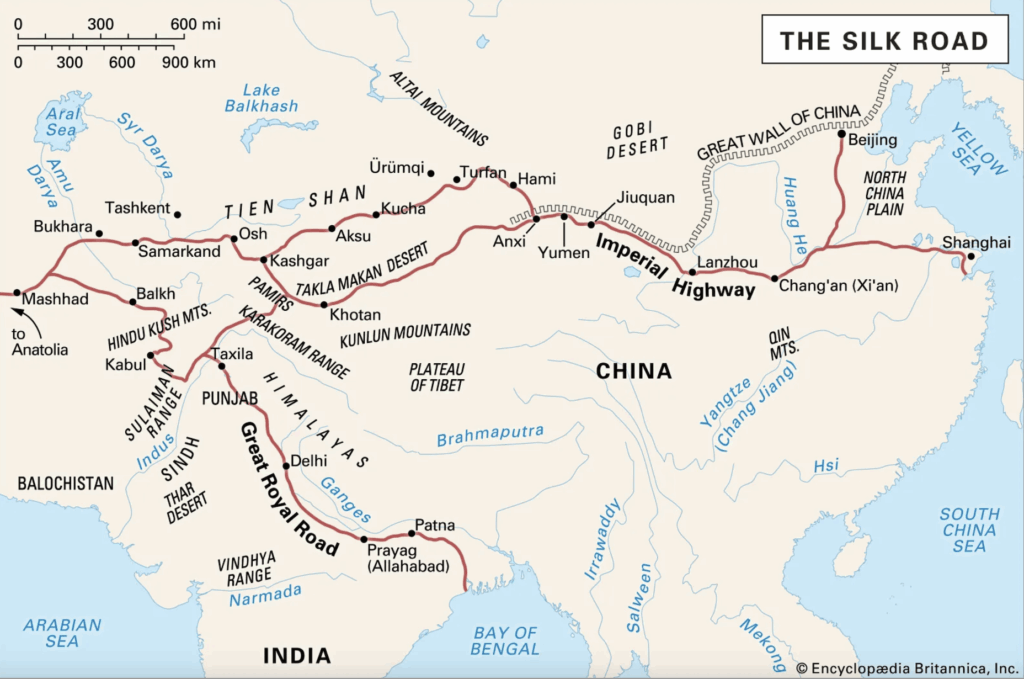
The “cha” pronunciation, familiar to us from Mandarin, spread primarily via ancient and robust land routes. When tea was a rare commodity, carried by camel caravans along with the footsteps of merchants, the name “cha” traveled with it beyond China’s borders. The great and ancient Silk Road served as the main artery for its transmission. Tea crossed deserts and mountains, entered the vast grasslands of Central Asia, traversed the Pamir Mountains to reach Persia, and from there radiated to the Middle East, the Ottoman Empire, and as far as Eastern Europe and North Africa.
Thus, we can clearly see a “cha/chai” pronunciation belt stretching across Eurasia: in Persian, it is “چای (chay)”; in Russian, “чай (chai)”; in Turkish, “çay”; in Urdu and Hindi, “چائے/चाय (chai)”; and even in Swahili in East Africa, it is “chai.” Merchants didn’t just sell the taste of tea; they imprinted the word “cha” onto the memory of this ancient road.
However, as the wheels of history turned into the Age of Sail, a new trade artery opened up on the high seas, bringing a different linguistic destiny for tea. When Portuguese and Dutch navigators, steering galleons through treacherous waters, arrived in the East, their merchant ships docked in the most prosperous coastal regions for maritime trade—especially Fujian. This region, a key window for foreign trade during the Ming and Qing dynasties, spoke Minnan (Southern Min), a dialect entirely different from the northern Mandarin. In Minnan, the pronunciation for “茶” is “te.”
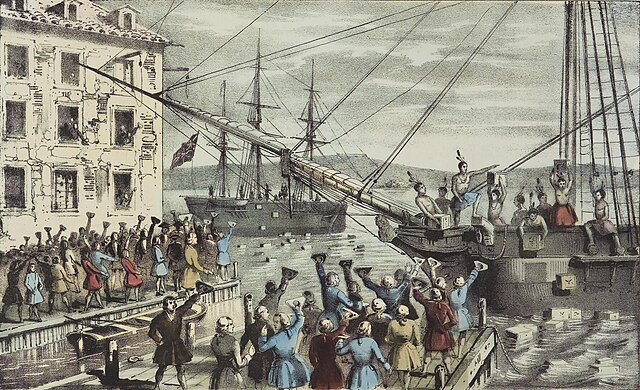
Merchants from the Dutch East India Company loaded crates of tea from Fujian’s ports onto ships bound for Europe. They took with them not only the exotic treasures of the East but also the local name for the leaf: “Te.” This pronunciation traveled with the sea breeze, crossed the oceans, landed on the continent of Western Europe, and quickly took root.
Thus, Dutch has “Thee,” which evolved into “Tea” in English, “Tee” in German, “Thé” in French, and “Té” in Spanish. Supported by a powerful maritime trade network, the “Te” pronunciation conquered the vocabularies of Western Europe and, with subsequent colonial expansion, was carried to the Americas, Australia, and more corners of the globe.
Interestingly, Portuguese is the exception. As the first European maritime power to reach the East, their word for “tea” is “Chá,” similar to the land-route pronunciation. The reason is that the main Portuguese trading post was in Macau, where the dominant local language was Cantonese. In Cantonese, the pronunciation of “茶” is much closer to “Cha.” Therefore, what the Portuguese brought back to Europe was the sound from the port of Macau.
And so, the pronunciation of “tea” became a subtle “linguistic living fossil.” It tells us how a single word’s global journey ultimately formed two distinct, clearly demarcated lineages. How a language refers to “tea” reveals whether one’s ancestors first encountered the magical Eastern leaf via land or by sea.
This phenomenon of vocabulary spreading along trade routes is not uncommon in linguistics; it’s like an archaeology of sound. A similar example is the word “orange.” In many European languages, the name—like the English “orange” and French “orange”—derives from the Arabic “nāranj.” This Arabic word was, in turn, borrowed from the Persian “nārang,” which ultimately traces back to the Sanskrit “nāraṅga.” This linguistic chain perfectly replicates the westward journey of the sweet orange: from its origin in India, it was brought by Persian and Arab merchants to the Mediterranean, eventually introduced to Spain by the Moors (Spanish still calls it “naranja”), and then spread throughout Europe. The name of a fruit thus records its millennia-long journey from Asia to Europe.
Whether it is called “Chai” or “Tea,” within that simple sound, one can perhaps hear the echo of camel bells on the ancient Silk Road, or the struggle of merchant ships against the wind and waves of the Age of Sail. A tiny leaf, in this way, has steeped the entire history and transformation of the world into our cups.
Use Downtiktok to download more TikTok food videos, click the following link to see how to use Downtiktok, the free watermark-free video download tool!

Leave a Reply