
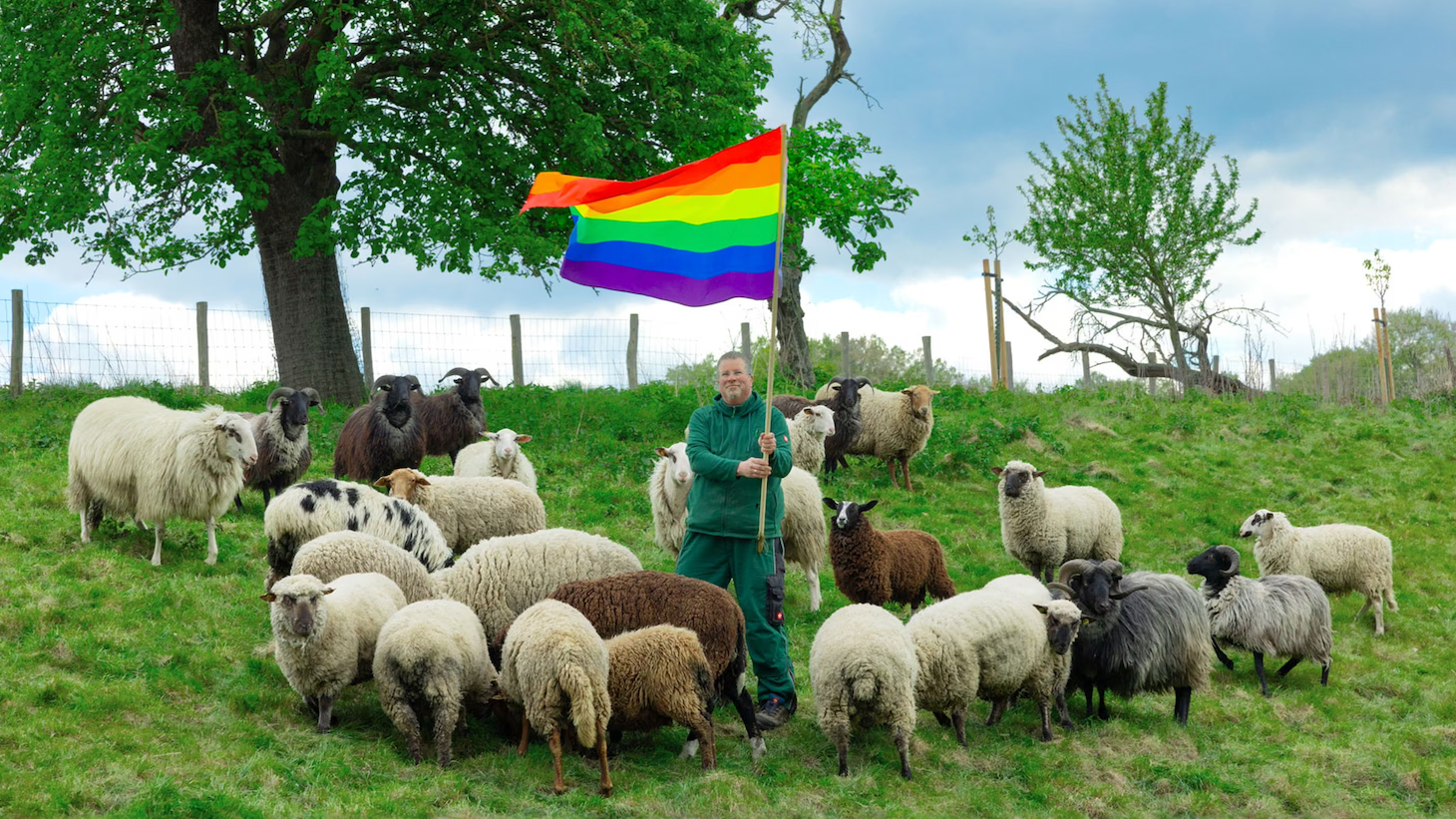
In the cutthroat world of livestock farming and its strict KPIs, a ram has only two ultimate missions: produce wool or produce offspring. If a strapping stud sheep ram zero interest in the flock of ewes but keeps making eyes at the rams next door, his fate is usually grim. Since he cannot fulfill the task of “passing on the family line,” he is destined to become mutton sausage.
However, in Westphalia, Germany, a farmer named Michael Stücke decided to offer a lifeline to these “non-straight” rams.
Michael and his companion Nadia Lites are both gay. When they learned that rams were often slaughtered in the breeding industry due to “sexual orientation issues,” they decided to create a sanctuary for them. In 2025, Michael and Nadia founded the “Rainbow Wool” project, specifically buying these rams—regarded as “scrap” by other farmers—at premium prices.
Currently, 35 gay rams of various breeds live on the farm. Here, they aren’t forced to “perform” or breed; they just need to eat grass, sunbathe, and “be themselves.” To sustain operations, Michael turned the sheep into personalities. Each ram has a carefully chosen name, such as “Wolli Wonka” (Charlie and the Chocolate Factory) and “Prince Wolliam.” Every day, they happily frolic and express their affection for one another.
Of course, skeptics might wonder if this is over-interpreting animal behavior. Do sheep really have sexual orientations? Scientific research actually supports Michael. A 2007 study by Oregon Health & Science University pointed out that in the sheep world, about 8% of rams (roughly 1 in 12) are exclusively interested in the same sex, while another 18-22% are bisexual. These “specific groups” are quite direct: they consistently perform the “Flehmen response” (curling the upper lip to inhale pheromones) toward other rams and enjoy snuggling. If forced into a pen with ewes, they remain indifferent or even show complete repulsion.
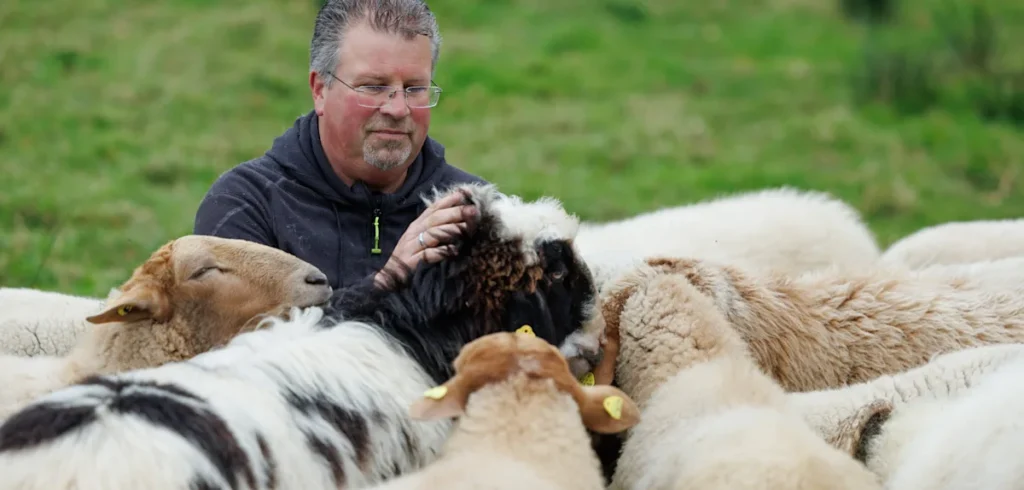
Naturally, some agriculturalists argue that humans love projecting their own emotions onto animals (anthropomorphism). They suggest this behavior might be simple physiological impulses rather than the complex “identity” found in human society. But for Michael, academic definitions don’t matter. What matters is that if he hadn’t bought these sheep, they would have become steaks.
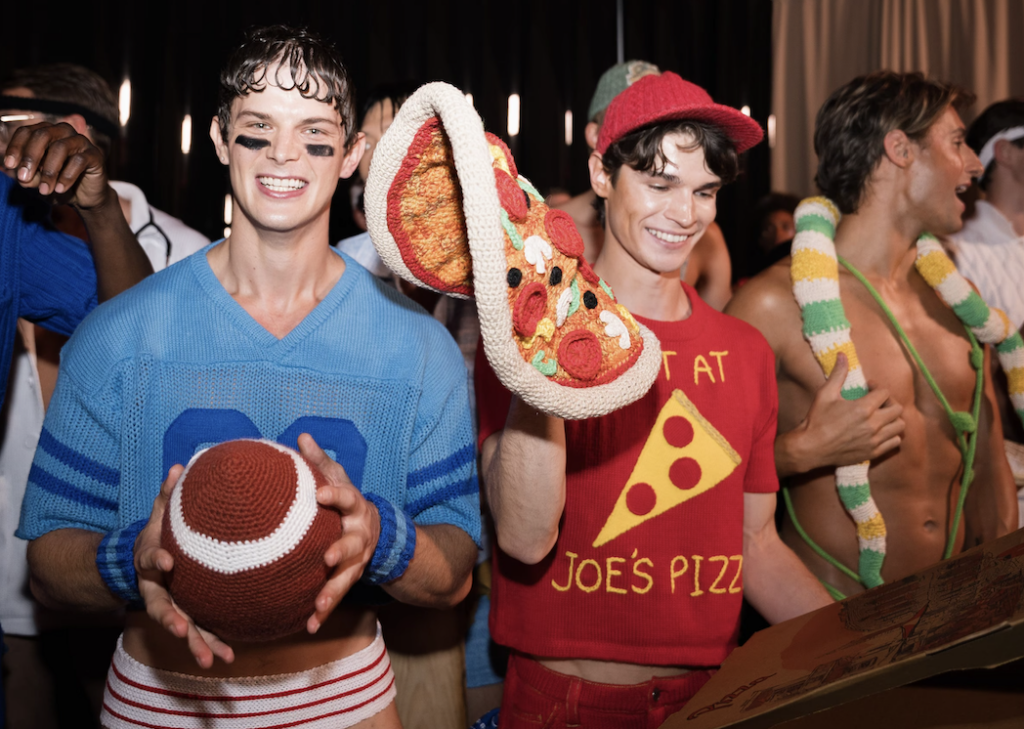
Since he saved the sheep and opened the farm, Michael decided to create economic value by “wearing” this unique natural phenomenon. In November 2025, the “Rainbow Wool” project collaborated with the LGBTQ dating app Grindr and renowned designer Michael Schmidt. They launched 36 high-fashion looks in New York made entirely from the wool of these rams, titled “I Wool Survive.”
The collection ranged from an Adam without Eve to pool boys, sailors, pizza delivery guys, plumbers, and leather daddies, covering classic male archetypes. The show’s intent was blunt: everything is natural. Wearing one of these sweaters isn’t just about warmth; it’s about wearing the “8% law of nature.”
However, as with all gender-related issues, “Rainbow Wool” went viral but also sparked controversy. Supporters see it as a genius idea combining animal protection with LGBTQIA+ rights. Opponents fired back, with the UK’s Daily Mail mocking it as the “ultimate test of woke culture.”
Criticism focused mainly on ethical double standards and scientific seriousness: If you care about animal welfare, why only save rams? Aren’t ewes culled for age or infertility worthy of saving? The project seems more like a symbol serving human social issues than pure animal protection.
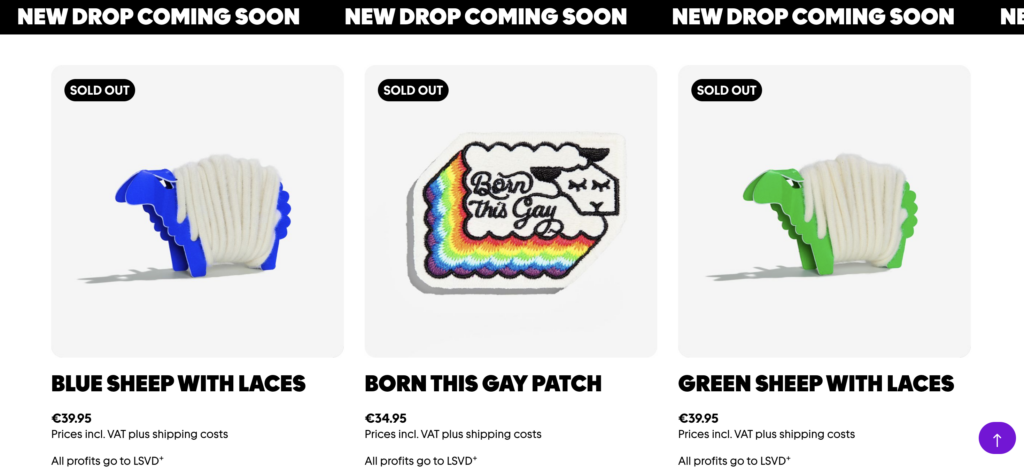
Despite the noise, Michael persevered. He admits running the farm is incredibly difficult. Not every ram that ignores ewes fits the bill; he needs those that consistently reject the opposite sex and have a gentle, non-aggressive nature—a hard find in a sea of sheep. The farm remains small-scale, selling wool-based LGBTQ-themed merchandise like hats, shoelaces, and patches, with part of the profits donated to the German Queer Diversity Federation.
Perhaps we don’t need to obsess over whether these sheep possess “self-identity.” For Wolli Wonka and Prince Wolliam, they understand neither human conflict nor public opinion storms. They are simply lucky enough to have escaped the butcher’s knife, living on the grass of Westphalia in unprecedented relaxation, just being happy sheep.

Leave a Reply